When considering durability in construction and manufacturing, corrosion resistance is key. Fasteners are essential components in countless applications, from building bridges to assembling machinery. However, the choice of material for these fasteners greatly impacts their longevity and reliability. What materials are best for corrosion-resistant fasteners?
Various materials offer unique benefits, but not all may suit every environment. Stainless steel, for instance, excels in many settings due to its chromium content. However, it can still corrode in harsh conditions unless properly treated. Similarly, coated fasteners provide additional layers of protection but may wear off over time.
Using the right fastener material is crucial for ensuring overall project integrity. A misjudgment could lead to failures or costly repairs. Thus, thorough consideration of each material’s properties and intended application is vital for success. Identifying the best corrosion-resistant fasteners requires careful analysis of specific needs and environments.
Understanding Corrosion and Its Impact on Fasteners
Corrosion is a significant issue that impacts fasteners across various industries. It occurs when metals react with their environment. This leads to deterioration, weakening structural integrity over time. Understanding the different types of corrosion helps in predicting its effects. For example, galvanic corrosion happens when two different metals are in contact. This reaction can accelerate the decay of one metal, leading to premature failure.
Different environments influence corrosion rates. High humidity, saltwater, and acidic conditions pose higher risks. Fasteners in these environments require special attention. Using corrosion-resistant materials is critical. Stainless steel, for instance, offers resistance due to its chromium content. However, it is not entirely immune. Factors like temperature and exposure duration can affect its performance.
Inadequate protection or wrong material selection can lead to costly mistakes. It's essential to assess the operating environment closely. Regular inspections also play a crucial role in managing corrosion threats. Despite advances in technology, many professionals still encounter unexpected corrosion issues. Learning from these experiences can lead to better decisions in material selection and maintenance practices.
Key Attributes of Corrosion Resistant Materials
When selecting corrosion-resistant fasteners, it’s essential to understand the key attributes of the materials involved. One critical characteristic is the ability to resist oxidation and degradation. Stainless steel, for example, offers a significant level of protection against rust and corrosion. This material is often used in diverse environments, making it a reliable choice.
Another important attribute is tensile strength, which determines how well a material can withstand stress. Titanium, known for its superior strength-to-weight ratio, is a great option. It provides excellent corrosion resistance in harsh conditions. For marine applications, specific alloys, like duplex stainless steel, enhance performance significantly.
Tips: Always consider the environment where the fasteners will be used. For example, harsh chemicals or salty air can rapidly affect certain materials. Regular inspections can help identify any signs of wear before larger issues arise.
It’s also wise to consult with a materials expert. They can help you choose the best fasteners for your specific needs. Sometimes, what looks strong might not perform well in extreme conditions. Testing materials under real-world scenarios can reveal unexpected weaknesses.
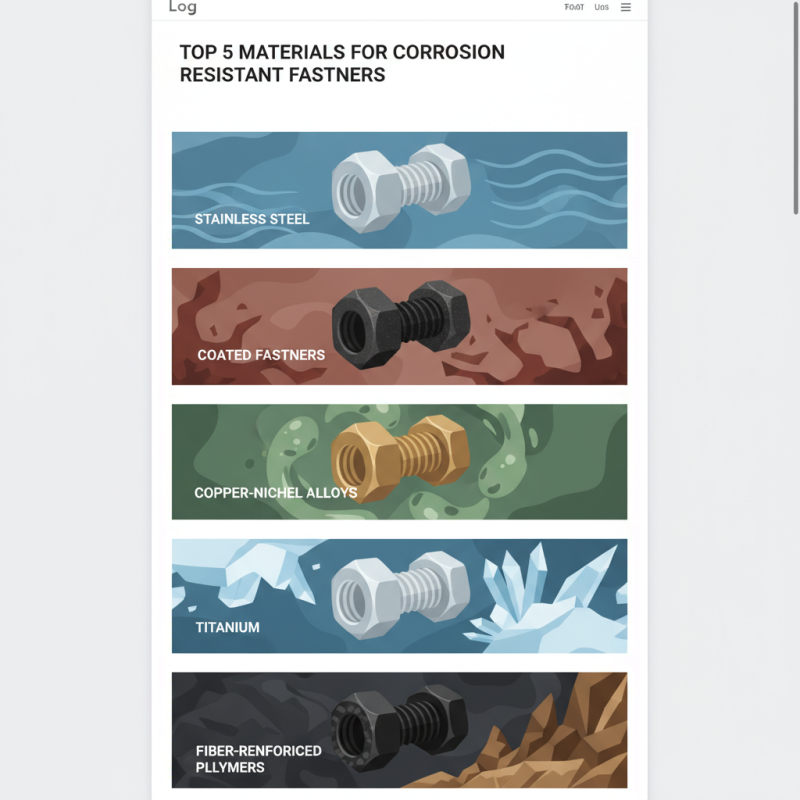
Top 5 Materials for Corrosion Resistant Fasteners
Corrosion-resistant fasteners are crucial in various industries, from construction to aerospace. Choosing the right material enhances longevity and reliability. Here are five top materials used for fasteners due to their corrosion resistance.
Stainless steel is well-known. Its high chromium content gives it excellent resistance to rust. It is commonly used in marine applications. However, not all stainless alloys perform equally. For example, marine-grade stainless, like 316, offers better performance than standard grades.
Another option is titanium. This lightweight metal has impressive corrosion resistance, especially in harsh environments. It can be found in medical devices and aerospace components. However, titanium fasteners are generally more expensive.
Carbon steel with protective coatings can also resist corrosion effectively. Zinc and epoxy coatings are popular. These finishes can diminish over time, so regular checks are necessary.
Tip: Consider the environment where the fasteners will be used. A humid climate can influence performance.
In industries where chemical exposure is high, special polymers can be beneficial. They provide excellent chemical resistance, though they may not handle high loads well. Be aware of trade-offs when selecting materials.
Tip: Always test fasteners in real conditions. Performance can vary based on specific factors like temperature and humidity.
Comparative Analysis of Corrosion Resistance Among Materials
Corrosion resistance is critical for fasteners used in harsh environments. Different materials provide varying levels of protection.
Stainless steel, for example, is often chosen for its versatility and good corrosion resistance. According to industry reports, it offers an average lifespan increase of 75% in high-humidity settings compared to standard carbon steel.
Aluminum is another contender, with a lightweight nature and inherent resistance to corrosion.
Studies show that aluminum can withstand certain acidic environments better than many metals. However, anodization can enhance its protective layer significantly, potentially doubling its lifespan in corrosive conditions.
While titanium provides excellent resistance, it comes with a higher cost. Research indicates that its lifespan can exceed 100 years under optimal conditions, but this makes it less accessible for many industries. Each of these materials has strengths and weaknesses that need consideration. Understanding the environmental factors and stressors can lead to more informed choices in fastener selection.
Applications and Industry Use Cases for Corrosion Resistant Fasteners
Corrosion-resistant fasteners play a vital role in numerous industries. They are essential for applications in
construction, automotive, and marine sectors, where exposure to harsh environments is frequent.
According to a report by the National Association of Corrosion Engineers, corrosion costs the U.S. economy
approximately $276 billion annually. This highlights the importance of selecting the right materials
for fasteners that can withstand corrosive elements.
In the marine industry, stainless steel is commonly used due to its excellent
resistance to saltwater. Fasteners made from duplex stainless steel have shown to be 50-100%
stronger than traditional austenitic stainless steels. This strength is crucial for ensuring the durability
of installations like docks and shipbuilding. In construction, galvanized coatings are often employed
for fasteners to enhance their resistance to rust in humid and wet conditions.
Tip: Always consider the environment when choosing fasteners.
Analyze potential exposure to corrosive agents.
In the automotive industry, specially coated fasteners can resist moisture, chemicals, and temperature changes.
A report from the Automotive Industry Action Group suggests that using corrosion-resistant fasteners
can extend vehicle lifespan by up to 10 years. This is significant for manufacturers looking to
enhance product reliability.
Tip: Opt for fasteners with the right certification. This ensures
compliance with industry standards and reliability in performance.
FAQS
: The ability to resist oxidation and degradation is crucial.
It offers significant protection against rust and corrosion.
Tensile strength is the critical factor for materials.
Titanium is recognized for this superior quality.
Regular inspections can reveal signs of wear and issues early.
They are 50-100% stronger than traditional stainless steels.
Galvanized coatings improve rust resistance in humid conditions.
They protect against moisture, chemicals, and temperature changes.
Consideration of exposure to corrosive agents is important.
They can potentially extend the lifespan by up to 10 years.
Conclusion
Corrosion is a significant issue that affects the integrity and longevity of fasteners in various applications. Understanding the mechanisms of corrosion and its impact is crucial for selecting the right materials. When considering what materials are best for corrosion-resistant fasteners, several key attributes must be taken into account, such as tensile strength and resistance to environment-induced degradation.
The top five materials renowned for their corrosion resistance include stainless steel, titanium, nickel alloys, brass, and polymers. A comparative analysis of these materials highlights their effectiveness in different environments, making them suitable for diverse applications across industries like construction, marine, and automotive sectors. Choosing the right material can enhance the durability and performance of fasteners, ultimately leading to safer and more reliable structures.

 VLC Part