10 Essential Tips for Selecting Needle Roller Bearings Effectively
Selecting the right needle roller bearings is crucial for ensuring optimal performance and longevity in various applications. These compact yet robust components are designed to accommodate high loads while maintaining efficiency, making them a popular choice in industries ranging from automotive to aerospace. However, choosing the most suitable needle roller bearings requires careful consideration of several factors including load ratings, material types, and design specifications. Understanding these elements can significantly influence the overall functionality and reliability of machinery or equipment.
In this article, we will explore ten essential tips that will guide you in effectively selecting needle roller bearings. By delving into key considerations such as operating conditions, dimensional accuracy, and lubrication requirements, you will be better equipped to make informed decisions. With the right knowledge at your disposal, you can enhance the performance of your machinery and ensure that your needle roller bearings can withstand the demands of your specific application. Whether you are an engineer, technician, or purchasing manager, these insights will prove invaluable in navigating the complexities of needle roller bearing selection.

Understanding the Basics of Needle Roller Bearings
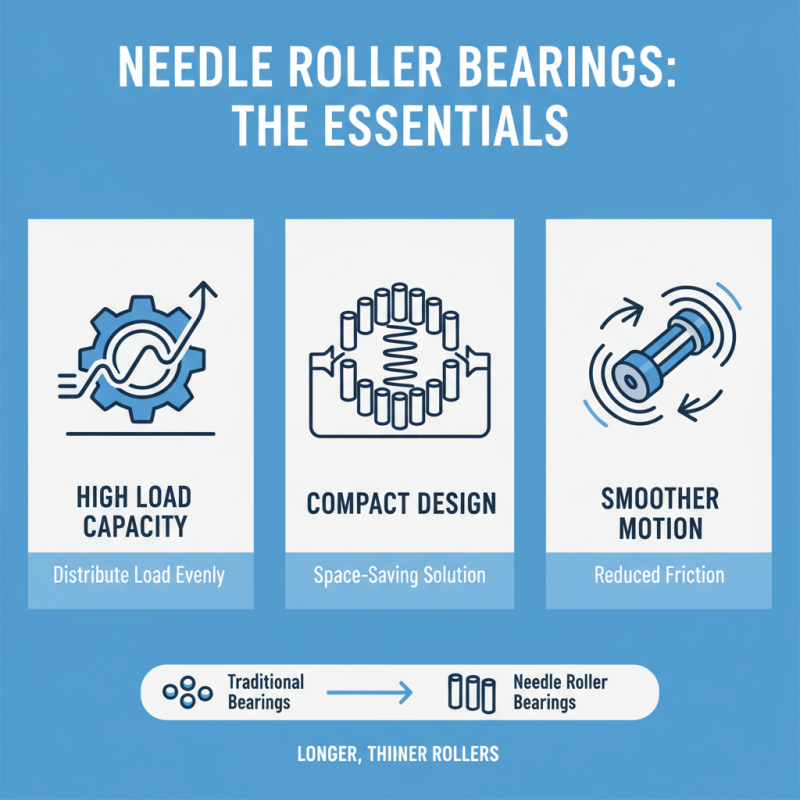
Needle roller bearings are a vital component in various mechanical systems, offering high load capacity and compact design. Understanding the basics of these bearings is essential for selecting the right type for your application. Unlike traditional bearings, needle roller bearings utilize long, thin cylindrical rollers, which help minimize space without sacrificing performance. This unique design allows for smoother motion and greater load distribution, making them ideal for applications where space is a constraint.
When selecting needle roller bearings, one crucial tip is to assess the load requirements of your application. It's essential to consider both radial and axial loads to ensure a proper fit. Additionally, evaluating the working environment is key; factors such as temperature, moisture, and potential contaminants can influence the longevity and performance of the bearings. Understanding these parameters will guide you in choosing the most suitable needle roller bearings.
Another important tip is to pay attention to the lubrication needs of the bearings. Proper lubrication not only reduces friction but also enhances the durability of the bearings. Selecting the right type of lubricant, whether grease or oil, is crucial as it can significantly impact the performance and maintenance intervals for the bearings. By grasping the fundamentals of needle roller bearings and following these tips, you can make more informed choices that enhance the efficiency and reliability of your machinery.
Key Factors to Consider When Choosing Needle Roller Bearings
When selecting needle roller bearings, several key factors must be carefully considered to ensure optimal performance and longevity. One crucial factor is the load capacity of the bearings, which significantly influences their applications. According to a report by the International Organization for Standardization (ISO), needle roller bearings offer high load-carrying capacity relative to their size, making them ideal for compact designs in various industrial applications. Engineers should evaluate the dynamic load ratings and ensure the selected bearings can handle the expected loads in service.
Another important consideration is the operating environment, including factors such as temperature, humidity, and exposure to contaminants. The American Bearing Manufacturers Association (ABMA) emphasizes the importance of selecting materials and surface treatments that can withstand harsh conditions. For instance, stainless steel needle roller bearings may be preferable in corrosive environments, while specific lubrication is critical in high-temperature applications to reduce wear and friction. Additionally, precise dimensional characteristics, such as inner and outer diameter tolerances, should be examined to ensure proper fit and function, which is vital for minimizing operational issues and maximizing the lifespan of the bearings.
10 Essential Tips for Selecting Needle Roller Bearings Effectively - Key Factors to Consider When Choosing Needle Roller Bearings
| Criteria |
Description |
Importance Level |
| Load Capacity |
Ensure the bearings can handle the maximum load in operation. |
High |
| Operating Speed |
Select bearings that can tolerate the rotational speed of your application. |
Medium |
| Inner Diameter |
Match the inner diameter with shaft size for effective operation. |
High |
| Outer Diameter |
Consider the space available for mounting; choose the right size. |
Medium |
| Material |
Select materials based on environment and load conditions (e.g., steel, stainless steel). |
High |
| Lubrication Type |
Determine if oil or grease is required for optimal performance. |
Medium |
| Precision Grade |
Higher precision levels may be necessary for specific applications. |
High |
| Temperature Range |
Select bearings that can operate within the temperature conditions of your application. |
High |
| Cost |
Balance cost against requirements; do not compromise quality for low price. |
Medium |
| Supplier Reputation |
Choose suppliers with a proven track record for quality and reliability. |
High |
Evaluating Load Capacity and Performance Criteria
When selecting needle roller bearings, understanding load capacity and performance criteria is crucial for ensuring optimal machinery function. Needle roller bearings are designed to accommodate radial loads in a compact space, making their load capacity an essential factor during selection. According to the International Organization for Standardization (ISO), the dynamic load rating (C) is often the primary consideration, as it indicates how much load the bearing can support while maintaining a specific lifespan under dynamic conditions. Ensuring that the chosen bearing meets or exceeds the requirements of the application can lead to increased longevity and decreased risk of failure.
In addition to load capacity, performance criteria such as speed rating, temperature tolerance, and lubrication must also be evaluated. Reports from the American Bearing Manufacturers Association (ABMA) suggest that needle roller bearings can operate effectively at speeds exceeding 100,000 RPM, contingent upon proper lubrication and operational conditions. Moreover, the operating temperature range should align with the application's environment; failure to consider this can result in premature wear. Utilizing mathematical models or software tools can assist engineers in assessing these parameters to ensure that they optimize bearing selection for efficiency and performance in demanding applications.
Assessing Material Quality and Bearing Lifespan
When selecting needle roller bearings, assessing material quality is paramount. The materials used in manufacturing these bearings significantly influence their performance, durability, and resistance to wear. High-quality steel, for instance, can enhance the bearing's load-bearing capacity and longevity, while inferior materials may lead to premature failure. It’s essential to look for bearings made from specialized alloys designed to withstand high stress and temperature changes, as these can effectively minimize deformation and fatigue over time.
Bearing lifespan is another critical factor that should guide your selection process. A longer lifespan not only translates to reduced maintenance costs but also ensures operational efficiency. Factors that affect lifespan include lubrication, environmental conditions, and static and dynamic loads. Choosing needle roller bearings that are specifically engineered for the intended application can help in maximizing their life expectancy. Regularly monitoring and maintaining these bearings also plays a crucial role in sustaining their performance and extending their operational life. By focusing on material quality and lifespan, you can make informed decisions that lead to better overall system reliability.
Analyzing Manufacturer Reputation and Warranty Options
When selecting needle roller bearings, the reputation of the manufacturer plays a crucial role in ensuring the quality and reliability of the product. A well-established manufacturer is likely to have a proven track record of producing high-quality bearings that meet industry standards. By researching customer reviews, industry certifications, and years of experience, buyers can ascertain the reliability of the manufacturer. A strong reputation often reflects an adherence to quality control practices and responsiveness to customer needs, which are essential for maintaining operational efficiency in various applications.
In addition to manufacturer reputation, evaluating warranty options is vital when making a selection. A comprehensive warranty not only demonstrates a manufacturer's confidence in their product but also provides peace of mind for the consumer. It is essential to understand the terms and conditions of the warranty, including what is covered and the duration. A good warranty can protect against defects and performance issues, minimizing the risk of unexpected costs and downtime. Thus, buyers should prioritize manufacturers that offer robust warranty options as part of their decision-making process.