7 Essential Tips for Choosing the Right Angular Contact Ball Bearings
When it comes to selecting the right angular contact ball bearings, the stakes are high, as improper choices can lead to performance issues and costly downtime. Industry experts emphasize the importance of making informed decisions in this area. For instance, Dr. Michael Thompson, a leading authority in bearings design, states, "The precision and load capacity of angular contact ball bearings can significantly impact the efficiency and longevity of mechanical systems." This highlights the critical role that these components play in various applications, from aerospace to automotive industries.
Understanding the nuances of angular contact ball bearings, including their design and application capabilities, is essential for engineers and procurement professionals. With their ability to accommodate both radial and axial loads, these bearings are uniquely suited for high-speed and high-precision setups. However, with the wide array of options available in the market, choosing the right bearing can be a daunting task. This article aims to provide seven essential tips that will guide you through the selection process, ensuring that you make well-informed choices that enhance operational efficiency and minimize risks.
Understanding Angular Contact Ball Bearings and Their Applications
Angular contact ball bearings are a vital component in various machinery, providing stability and precision in rotating applications. These bearings accommodate both radial and axial loads, which makes them ideal for high-speed applications such as spindles in machine tools, automotive components, and aerospace machinery. According to a report by the Bearing Manufacturers Association, the global market for these bearings is projected to grow at a compound annual growth rate (CAGR) of 6% through 2025, highlighting their increasing relevance in advanced engineering solutions.
When selecting the right angular contact ball bearings, it's essential to keep in mind a few critical tips. First, consider the contact angle; it influences the bearing’s load handling capability and rigidity. A larger contact angle allows for higher axial loads but may reduce speed capability. Second, assess the bearing material for durability and performance in specific environmental conditions. For instance, hybrid ceramic balls offer superior wear resistance and can operate in extreme temperatures.
Lastly, ensure proper bearing installation and alignment. Misalignment can significantly reduce bearing life and efficiency. It’s advisable to use precision tools to measure and adjust the installation, ensuring optimal performance in your application. By following these guidelines, you can select angular contact ball bearings that meet the rigorous demands of your operational needs.
Key Factors to Consider When Selecting Angular Contact Ball Bearings
When selecting angular contact ball bearings, there are several key factors to consider that can significantly impact performance and longevity. Firstly, the load direction is crucial. Angular contact ball bearings are designed to accommodate axial loads in one direction, which makes understanding the specific application essential. Evaluate the load specifications, including radial and axial loads, to ensure the bearings can handle operational demands effectively.
Another important consideration is the bearing's design and the required preload. Preload affects the stiffness of the bearing and can improve performance in precision applications. It's vital to select a preload level that matches your application’s requirements; too little can lead to misalignment, while too much can cause excessive wear.
Lastly, materials and lubrication play a significant role in the performance of angular contact ball bearings. Opt for high-quality materials that can withstand the operating environment, and choose the right type of lubrication to minimize friction and heat generation. Selecting the appropriate grease or oil, along with regular maintenance, will enhance the overall functionality and lifespan of the bearings.
7 Essential Tips for Choosing the Right Angular Contact Ball Bearings
| Factor |
Description |
Importance |
Recommendations |
| Load Ratings |
Select bearings with appropriate load ratings for your application. |
High |
Use manufacturer catalogs to find bearings that match your load requirements. |
| Contact Angle |
The contact angle affects the axial load capacity and operating conditions. |
High |
Choose a contact angle based on the specific loading conditions in your setup. |
| Speed Rating |
Ensure the bearings can handle the operating speed. |
Medium |
Review speed ratings against your application’s requirements. |
| Material |
Consider the type of material for durability and resistance to environmental conditions. |
Medium |
Use stainless steel or ceramic for harsh conditions. |
| Retainer Type |
The retainer influences lubrication and speed capabilities. |
Low |
Opt for a design that complements your speed and lubrication preferences. |
| Lubrication |
Select the right type and method of lubrication for longevity. |
High |
Consider sealed or shielded bearings to minimize maintenance. |
| Installation |
Proper installation is crucial for performance and lifespan. |
High |
Follow installation guidelines carefully to avoid early failures. |
The Role of Load Ratings in Choosing Angular Contact Ball Bearings
When selecting angular contact ball bearings, understanding
load ratings is crucial for ensuring optimal performance
and longevity in applications. Load ratings, expressed in terms of dynamic and
static loads, indicate how much load a bearing can handle under various conditions.
According to the International Organization for Standardization (ISO) 281
standard, dynamic load ratings are significantly important as they help predict the bearing's lifespan
based on the operating conditions. For instance, a common rule of thumb is that every 15%
increase in the load applied can reduce the bearing's life by half, emphasizing the need to match the
correct load rating with the expected operational loads.
Furthermore, finer distinctions such as the service life of angular contact ball bearings can often be
derived from their load ratings. A report by the American Bearing
Manufacturers Association (ABMA) mentions that selecting bearings with appropriate load ratings
can improve reliability by up to 25%. This is particularly
important in high-speed applications like electric motors and robotics, where improper load could
lead to premature failure. Understanding the implications of load ratings not only aids in selecting
the right bearings but also contributes to enhanced efficiency and reduced maintenance costs over time.
Material Selection for Optimal Performance in Angular Contact Ball Bearings
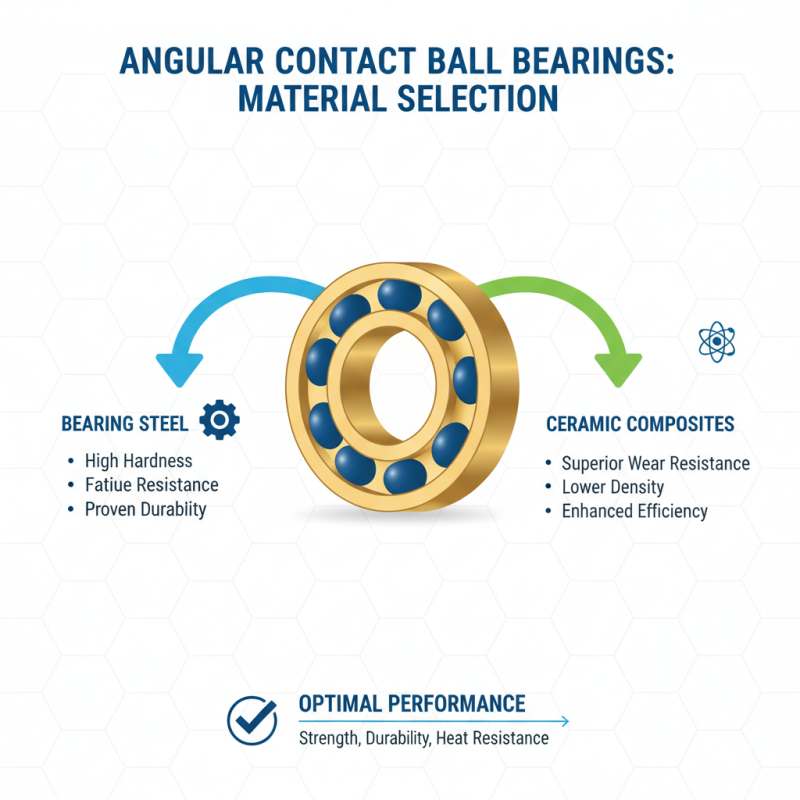
When selecting angular contact ball bearings, material selection is paramount for ensuring optimal performance. The choice of materials significantly affects the bearing's strength, durability, and heat resistance. For high-performance applications, manufacturers often prefer materials such as bearing steel, which provides excellent hardness and fatigue resistance. Additionally, ceramic composites are gaining popularity due to their superior wear resistance and lower density, which can enhance the efficiency of machinery.
Moreover, the bearing's ability to withstand static and dynamic loads is influenced by the race thickness and housing stiffness. Numerical analyses reveal that proper engineering and modeling—such as using advanced simulation tools—are critical in predicting how an angular contact ball bearing will perform under different loading conditions. This is especially essential in applications like wind turbines, where reliability and longevity are crucial. The interplay between material choices and design intricacies can greatly influence the overall effectiveness and lifespan of angular contact ball bearings.
Aligning Bearing Specifications with Operational Requirements and Conditions
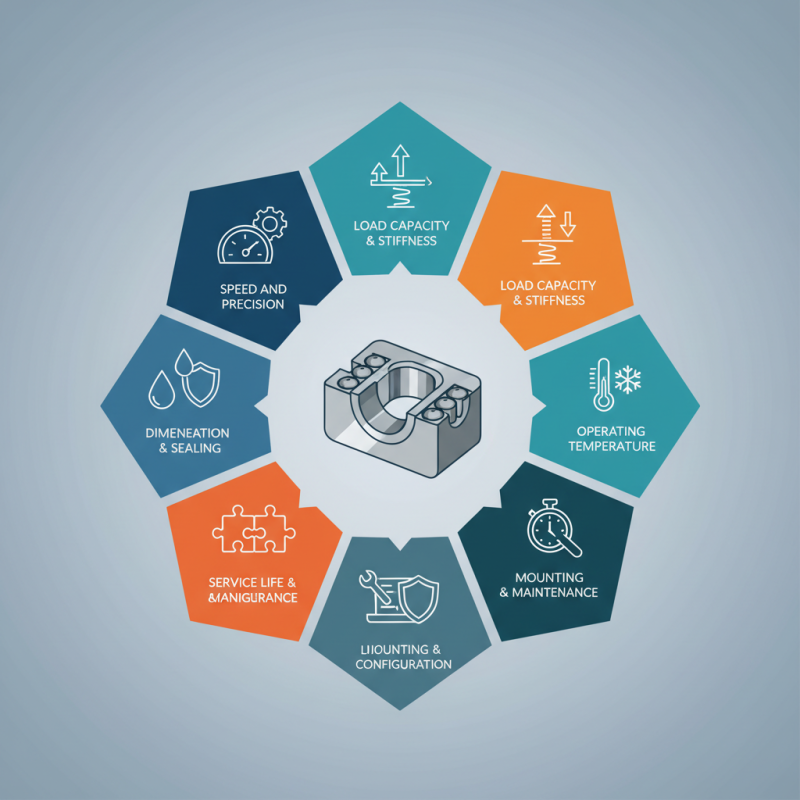
When selecting angular contact ball bearings, aligning their specifications with operational requirements is crucial. The performance of these bearings is heavily influenced by factors such as load ratings, speed limits, and environmental conditions. According to a report by the International Organization for Standardization (ISO), approximately 25% of bearing failures can be traced back to improper selection based on inadequate operational assessments. Thus, a thorough evaluation of operational demands is essential to ensure optimal bearing performance and longevity.
One pivotal aspect of this alignment is understanding the load and speed conditions the bearings will face. Research demonstrates that bearings operating under combined loads, or dynamic conditions, require specific design considerations. For instance, the ABMA (Anti-Ball Bearing Manufacturers Association) explains that proper axial and radial load ratings significantly enhance bearing life, with optimal configurations capable of extending the lifespan by up to 40%. Furthermore, the operating temperature and lubrication also play essential roles; utilizing the right lubricant can reduce friction and increase efficiency, thereby meeting or even exceeding operational requirements. Thus, a methodical approach to pairing bearing specifications with these critical factors can dramatically improve performance and reliability.