What are the Advantages of Flexible PCBs in Electronics?
In the ever-evolving landscape of electronics, Flexible Pcbs are gaining traction. A recent market research report indicated that the flexible PCB market is expected to reach $38 billion by 2027. This growth is driven by increasing demand in various sectors, including consumer electronics and medical devices. Flexible PCBs offer significant advantages, such as lightweight designs and space-saving features. These qualities make flexible PCBs ideal for compact gadgets that require adaptability.
Consider a smartphone, where thinness and flexibility are crucial. Flexible PCBs enable manufacturers to create intricate designs without compromising performance. Data from industry reports reveal that over 50% of electronic devices now incorporate flexible PCB technology. However, despite these benefits, there are challenges. Production costs can be higher, and the materials used may have limitations. Understanding these nuances is essential for companies aiming to scale up production efficiently. Flexible PCBs present both opportunities and complexities that demand careful consideration.
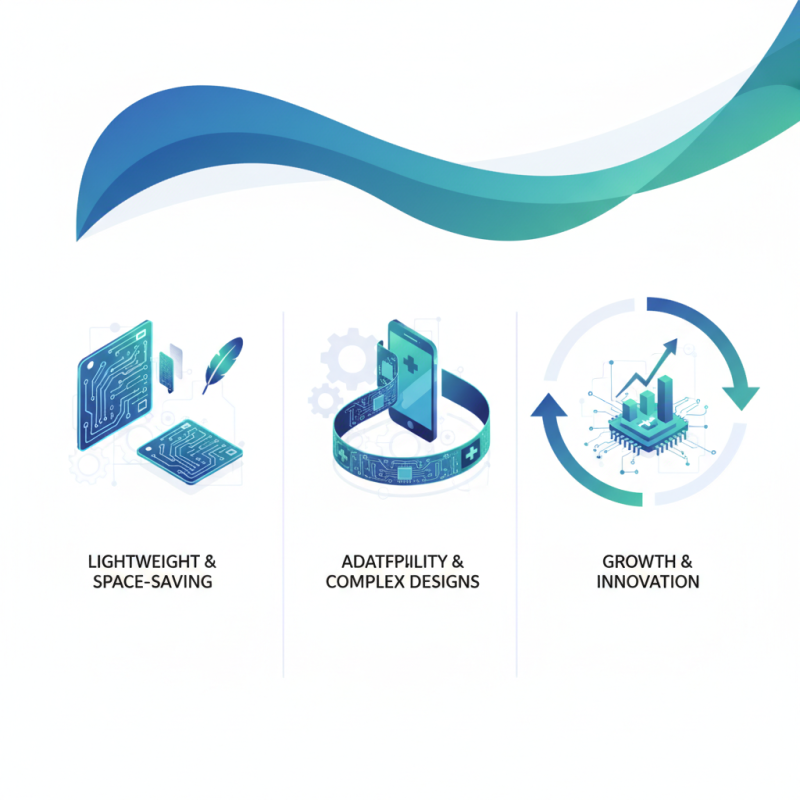
Benefits of Flexible PCBs in Modern Electronics
Flexible PCBs are increasingly popular in modern electronics. Their unique design allows for easy integration into compact spaces. They can bend and twist without compromising functionality. This flexibility enables designers to create more innovative products with fewer restrictions. Engineers appreciate how these boards reduce wiring complexity, saving time and space.
In addition to space-saving, flexible PCBs often weigh less than traditional rigid boards. This is crucial for portable devices, where every gram matters. They also enhance durability by minimizing the risk of breakage during movement. However, manufacturing can be challenging, and costs may be higher. This makes some companies hesitant to switch.
The performance of flexible PCBs can lead to improved signal integrity. However, the potential for defects during production is a concern. Designers must ensure quality control throughout the process. Balancing these factors is key in determining whether to adopt flexible PCBs. The benefits are clear, yet the challenges cannot be ignored.
Advantages of Flexible PCBs in Modern Electronics
Enhanced Design Flexibility and Space-Saving Capabilities
Flexible PCBs offer significant design flexibility and space-saving capabilities. The unique construction of these circuits allows them to bend and conform to various shapes. This is essential in modern electronic devices. According to a recent industry report, flexible PCBs save up to 30% more space compared to traditional rigid boards. This space-saving quality is crucial in compact devices like smartphones and wearables.
With the demand for miniaturization, the importance of flexible PCBs only grows. They enable designers to arrange components more freely and efficiently. A notable finding shows that flexible circuit technology can reduce assembly time by around 25%. This improvement can lead to faster production cycles, benefiting manufacturers. However, challenges remain in handling the materials used. Some designers still struggle with durability issues, which can lead to failures in high-stress applications.
Moreover, not all designs benefit equally from flexible PCBs. While their adaptability is remarkable, the cost can be a concern. Reports indicate that flexible boards can be 20% more expensive than traditional options. Companies must weigh the benefits against the costs. Understanding these nuances is vital for successful integration into new products.
Improved Durability and Reliability Under Various Conditions
Flexible printed circuit boards (PCBs) offer significant advantages in terms of durability and reliability. These PCBs withstand a range of environmental conditions, making them suitable for various applications. A study by Smithers Pira indicates that the global flexible PCB market is expected to reach $40 billion by 2024, driven by the demand for more robust electronic devices.
Flexible circuits can endure mechanical stress and movement. Their ability to bend and twist allows for innovative design in gadgets like smartphones and wearables. This flexibility reduces the risk of breakage. However, this does not mean they are immune to failure. Proper design and manufacturing processes are crucial to ensure that they can handle real-world use. Poor quality control can lead to premature failures.
**Tip:** When designing flexible PCBs, consider stress points carefully. Addressing potential weak areas early on can enhance durability.
Another advantage of flexible PCBs lies in their performance in extreme temperatures. Research shows that flexible materials often perform better under temperature fluctuations compared to traditional rigid boards. But, it's important to note that material choices play a vital role. Using inferior materials can result in unexpected failures. Manufacturers should prioritize selecting high-quality, temperature-resistant materials.
**Tip:** Always test prototypes under various conditions. This can reveal crucial insights about reliability that may be overlooked during initial design stages.
Cost-Effectiveness in Production and Material Use
Flexible PCBs offer notable cost-effectiveness in production and material utilization. Traditional rigid PCBs often require additional components and space for assembly. In contrast, flexible circuits can be made thinner and save material. This leads to lower manufacturing costs. Less waste is generated during production, which can significantly reduce expenses.
When designing flexible PCBs, consider the layout carefully. A well-planned design can minimize material usage while maintaining functionality. Look for areas where the material can be reduced without sacrificing quality. Remember, an innovative design might save costs but could also complicate assembly. Balancing both is essential.
For manufacturers, switching to flexible circuits can mean fewer components overall. This consolidation can streamline assembly. However, it’s important to assess potential challenges. The flexibility can sometimes make handling difficult during manufacturing. Training staff on new processes is vital. The transition may not be smooth, so frequent evaluations can help pinpoint problems. These reflections can lead to better practices in the future.
Facilitating Lightweight and Compact Electronic Devices
Flexible printed circuit boards (PCBs) are transforming the landscape of electronic devices. Their lightweight nature allows for significant space savings in design. Recent industry reports indicate that flexible PCBs can reduce the overall weight of devices by up to 70%. This reduction improves portability and user experience, making modern gadgets more convenient to carry.
The compact design of flexible PCBs opens up new possibilities in product development. It enables the creation of thinner devices without compromising performance. A study from a leading electronics research firm noted that over 50% of manufacturers are prioritizing flexible PCBs for compact designs. This trend reflects a growing demand for sleek and efficient products in sectors like smartphones and wearables. However, the manufacturing process can be challenging and may lead to inconsistencies. Quality control remains a critical aspect of ensuring long-term reliability in these compact solutions.
Conclusion
Flexible PCBs have revolutionized modern electronics by offering numerous advantages that traditional rigid circuits cannot match. One of the primary benefits is their enhanced design flexibility, allowing for seamless integration into compact spaces without sacrificing performance. This space-saving capability not only optimizes device layout but also contributes to the overall lightweight design of electronic products, making them more portable and user-friendly.
Additionally, flexible PCBs exhibit improved durability and reliability under a variety of environmental conditions. Their unique construction enables them to withstand mechanical stress, bending, and vibrations, ensuring longevity in diverse applications. Moreover, their cost-effectiveness in production and material use makes flexible PCBs an attractive choice for manufacturers across various industries, facilitating innovative designs and applications. Overall, the versatility of flexible PCBs continues to drive advancements in electronic device technology, paving the way for future innovations.

